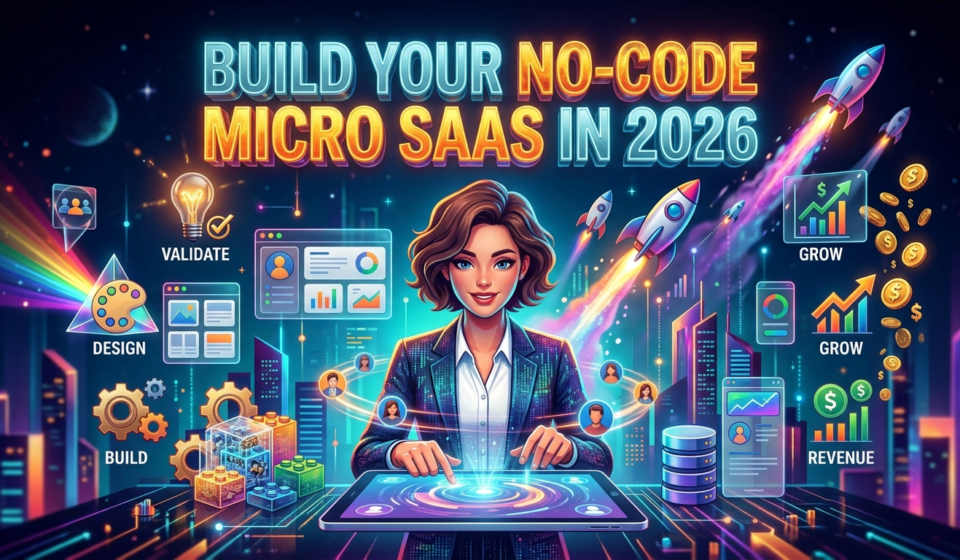

How to Build a No-Code Micro SaaS in 2026: A Step-by-Step Blueprint
Building a profitable software business no longer requires an engineering degree, a team of developers, or thousands of dollars in venture capital.
Thanks to modern AI-driven visual development tools, non-technical founders are launching specialized micro-SaaS products in days instead of months. By focusing on a narrow problem for a specific niche, you can build a lean, high-margin software-as-a-service (SaaS) business that generates reliable monthly recurring revenue (MRR).
This comprehensive 2026 guide breaks down exact strategies to validate, build, and monetize a no-code micro SaaS from scratch.
What is a No-Code Micro SaaS?
A micro SaaS is a small-scale software solution that addresses a hyper-specific pain point for a defined target audience. Unlike venture-backed startups chasing billion-dollar markets, micro-SaaS businesses prioritize target-market focus, low overhead costs, and fast profitability.
Combining this business model with no-code platforms lets you build logic, set up database architecture, manage subscriptions, and process transactions entirely through visual interfaces and AI prompts.
Why 2026 is the Golden Era for No-Code Founders
- AI-Assisted App Generation: Modern platforms let you prompt application logic, user authentication, and multi-tenant databases in natural language.
- Modular Hybrid Tech Stacks: You can connect frontends, visual backends, and external APIs with minimal friction using tools like Supabase, Xano, or Make.
- Enterprise Acceptance: Small businesses and enterprises routinely accept tools built on visual development platforms due to improved performance and security standards.
Step 1: Find and Validate a High-Intent Niche Idea
The biggest mistake non-technical founders make is trying to build “the next Notion” or “a better Shopify.” Micro SaaS succeeds by going narrow and deep.
How to Uncover Validated Micro SaaS Ideas
- Vertical-Specific Workflows: Instead of a general scheduling app, build a booking tool tailored specifically for mobile pet groomers or tattoo studios with deposit collection logic.
- Mine Customer Complaints: Search forums like Reddit (e.g.,
r/SaaS,r/smallbusiness), Capterra, or G2 for negative reviews of existing software. Look for complaints like “This software is too bloated” or “I pay $50/month just for one feature.” - Platform Ecosystems: Build micro-apps that extend the functionality of established ecosystems like Shopify apps, Chrome extensions, or Slack bots.
Validate Before You Build
Never build software without proof of demand.
- Set up a simple landing page highlighting your value proposition.
- Run a 14-day pre-order/waitlist campaign. If you cannot get 10-20 people to join a waitlist or pre-order, re-evaluate the problem.
Step 2: Select Your 2026 No-Code Tech Stack
Choosing the right stack depends on whether your app is a simple database portal, a web application, or a native mobile product.
| Product Type | Recommended Frontend | Visual Backend / Database | Payments & Auth |
| Complex Web SaaS | Bubble / Lovable | Bubble Native / Supabase | Stripe Billing |
| Internal Tools & Portals | Softr / Glide | Airtable / Google Sheets | Outseta / Memberstack |
| Mobile-First Apps | FlutterFlow | Firebase / Supabase | RevenueCat / Stripe |
| Directory & Content Hubs | Webflow / Framer | Xano / Supabase | Stripe / Lemon Squeezy |
Pro Tip: Use Stripe or Lemon Squeezy for automated billing. They handle global tax compliance, multi-currency checkout, and recurring billing out of the box.
Step 3: Build Your Minimum Viable Product (MVP)
An MVP should focus exclusively on solving one core problem well. Resist feature creep — secondary features can wait until paying users request them.
┌────────────────────────────────────────────────────────┐
│                   Core Micro SaaS MVP                   │
├───────────────────┬───────────────────┬────────────────┤
│ 1. Simple Onboard │ 2. Core Execution │ 3. Self-Serve  │
│    & Auth         │    Workflow       │    Billing     │
└───────────────────┴───────────────────┴────────────────┘
Essential Steps to Build the MVP:
- Structure Your Database: Define your collections (e.g., Users, Organizations, Transactions). Ensure user data remains strictly isolated to guarantee security.
- Design the User Interface: Keep UI clean, simple, and responsive. Prioritize speed and clarity over extravagant animations.
- Configure Automations: Integrate tools like Make or Zapier to run background tasks, send transactional emails, and sync customer data.
- Setup Tiered Subscriptions: Create a straightforward pricing model (e.g., $19/mo Starter, $49/mo Pro) with usage-based thresholds.
Step 4: Launch and Acquire Your First 10 Paying Customers
Launching a product is not a single event—it is a continuous marketing loop. Your initial goal is to secure 10 paying users who provide feedback and validate your core offer.
          [ Cold Outreach ] ──────┐
                                   ▼
[ Niche Communities ] ───► [ High-Converting ] ───► [ 10 Paying Users ]
                               Landing Page
                                   ▲
          [ Content & Demos ] ─────┘
Effective Zero-Cost Acquisition Tactics
- Direct Cold Outreach: Find 50 ideal clients on LinkedIn, Twitter/X, or email. Send short, personalized video audits (using Loom) showing how your product solves their specific problem.
- Launch on Niche Platforms: Submit your product to Product Hunt, Reddit communities, BetaList, and indie founder groups.
- Build in Public: Share your metrics, dev struggles, and milestone wins on social media to build organic interest and trust.
Step 5: Optimize, Retain, and Scale
Once you have active users, shift focus from adding new features to retention and churn reduction.
- Collect Continuous Feedback: Install lightweight feedback widgets (or conduct brief customer interviews) to catch bugs and identify usability friction early.
- Monitor Key SaaS Metrics: Keep a close eye on Churn Rate, Customer Acquisition Cost (CAC), and Monthly Recurring Revenue (MRR).
- Automate Customer Onboarding: Use interactive product tours and clear email sequences to help new signups experience your core feature’s value in their first session.
Final Thoughts
Building a no-code micro SaaS in 2026 is no longer restricted by technical bottlenecks. By pairing a focused niche problem with modern visual development platforms, a single founder can launch, iterate, and build a profitable software business with minimal overhead.
Pick a specific audience, validate their core problem, ship a lean solution, and iterate based on real feedback.